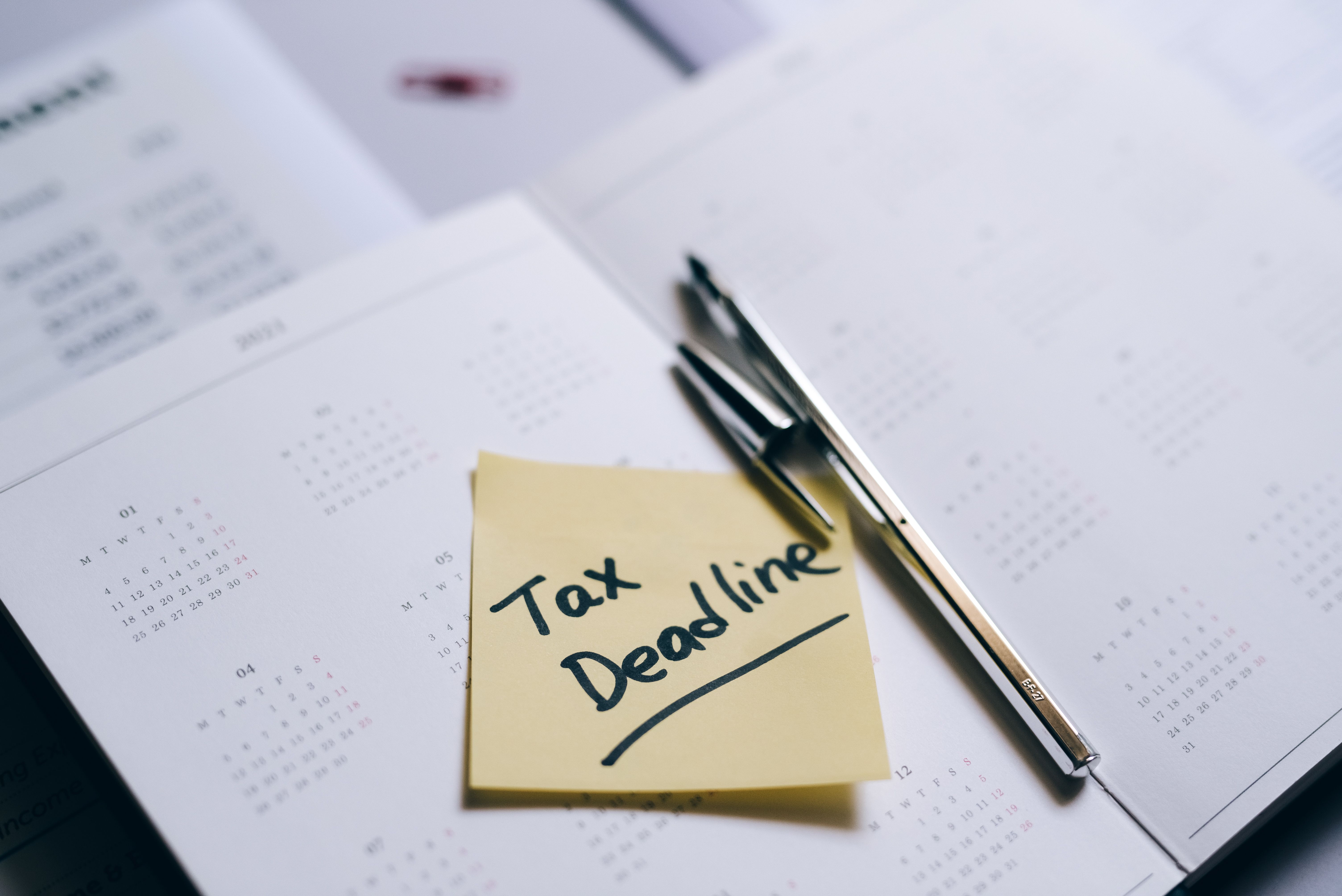
Every company has two Singapore corporate tax filing deadlines to file each year: Estimated Chargeable Income (ECI) within three months of financial year-end (FYE), and the annual Corporate Income Tax Return by 30 November 2026. Miss either one and IRAS can raise its own estimate of what you owe, fine your company up to S$5,000 per offence, and pursue directors personally, with penalties up to S$10,000 or 12 months in jail for non-compliance.
Not sure where to start? Follow this guide as it takes you through your 2026 Singapore corporate tax obligations in the order you need to handle them, from finding your ECI deadline to filing your annual tax return and paying the tax due.
Step 1: Find Your Company's 2026 ECI Deadline
What is ECI?
ECI is your company's estimated taxable profits for the relevant financial year, before deducting the applicable exempt amount under schemes such as the Partial Tax Exemption or Start-Up Tax Exemption.
It is an estimate, so the eventual tax payable can differ when the company files its annual Corporate Income Tax Return.
Unlike the annual Corporate Income Tax Return, there is no single ECI deadline for every company. Your company generally has to file ECI within three months from the end of its financial year. IRAS will usually notify the company in the last month of its financial year, but you are still responsible for filing on time even if you do not receive a notification.
| Your financial year-end | ECI deadline |
|---|---|
| 31 December 2025 | 31 March 2026 |
| 31 March 2026 | 30 June 2026 |
| 30 June 2026 | 30 September 2026 |
| 30 September 2026 | 31 December 2026 |
For example, if your company's FYE is 30 June 2026, your ECI is due by 30 September 2026. Check your company's financial statements or accounting records to confirm the date. Your FYE is the last day of your company's accounting period. It is important beyond tax because it also affects other statutory deadlines, including your ACRA annual return deadline.
Step 2: Check Whether You Actually Need to File ECI
Your company may be exempt from filing ECI if both of these conditions are met:
- Your company's annual revenue is S$5 million or less; and
- Your company's ECI is nil.
In simple terms, revenue is what your company earns from its business, while ECI is its estimated taxable income after the relevant tax adjustments. So having revenue does not necessarily mean your company will have positive ECI.
S$5 million revenue − allowable deductions and adjustments = S$0 ECI
If both the revenue and ECI conditions are met, the company does not need to file ECI. But if the company has S$5 million or less in revenue but positive ECI, it must still file.
Step 3: File Your ECI, and Decide How You Will Pay It
Once you have determined that ECI filing is required, submit it through myTax Portal within three months of your FYE. The ECI you file also determines how you can manage the resulting tax payment.
Want to pay ECI tax by instalments?
Singapore-registered companies can use GIRO to pay their estimated tax by instalments. If your company does not already have a Corporate Income Tax GIRO arrangement, we would advise you to sign up at least three weeks before filing ECI. The GIRO arrangement must be approved before the payment due date, generally one month from the date of the Notice of Assessment, for instalment payment to apply. Otherwise, the full estimated tax amount is due within one month of the assessment.
How to set up GIRO instalments for ECI
Apply through the "Apply/Manage GIRO Plan" service in myTax Portal. Your company can use the applicable electronic GIRO process where available, subject to the bank's approval requirements. If you plan to use instalments, arrange this before filing ECI, not after receiving the assessment. IRAS gives companies more instalments when ECI is filed earlier:
| When ECI is filed | Maximum instalments |
|---|---|
| Within 1 month of FYE | 10 |
| Within 2 months of FYE | 8 |
| Within 3 months of FYE | 6 |
The company must be registered in Singapore and on GIRO to enjoy the instalment arrangement. So if cash flow matters to your business, filing ECI early can be financially useful.
Step 4: After ECI, Prepare for Your Annual Corporate Tax Return
ECI is only an estimate. Your company still needs to prepare and file its annual Corporate Income Tax Return for YA 2026 by the Singapore corporate tax filing deadline of 30 November 2026. Start with:
- financial statements
- detailed profit and loss statement
- tax computation
- supporting schedules and documents
- records supporting revenue
- records supporting deductible expenses
- details of capital expenditure and capital allowances
- information on unutilised losses or allowances, where applicable
- documents supporting any special tax claims
The exact documents you submit depend on the tax form your company files. For example, companies filing Form C must submit their financial statements, tax computation and supporting documents with the return. Companies filing Form C-S do not submit those documents with the return, but must prepare and retain them in case IRAS requests them.
Don't leave Corppass until the last minute
Step 5: Determine Which Singapore Corporate Tax Form Your Company Needs
| Form | Who files it |
|---|---|
| Form C-S (Lite) | Qualifying companies with annual revenue of S$200,000 or below |
| Form C-S | Qualifying Singapore-incorporated companies with annual revenue of S$5 million or below |
| Form C | Companies that do not qualify for Form C-S, Form C-S (Lite) or the Form for Dormant Company |
| Form for Dormant Company | Companies that did not carry on business and had no income during the financial year, subject to the applicable requirements |
However, revenue alone does not determine whether your company qualifies for Form C-S. For Form C-S, the company must also:
- be incorporated in Singapore;
- derive only income taxable at the prevailing 17% Corporate Income Tax rate; and
- not claim certain items, including current-year loss or capital allowance carry-back, group relief, investment allowance, foreign tax credit or tax deducted at source.
Form C-S (Lite) is an option for companies that already qualify for Form C-S and have annual revenue of S$200,000 or below. It requires only six essential fields. If your company does not meet the Form C-S requirements, it must file Form C.
Step 6: Work Out Your Company's Taxable Income
Your accounting profit is not necessarily the amount on which your company pays tax. Before filing, your tax computation adjusts the accounting result for items such as:
- non-deductible expenses
- non-taxable income
- capital allowances
- unutilised losses
- tax deductions
- foreign tax credits or other tax set-offs, and
- applicable Singapore corporate tax exemption schemes
Singapore's corporate tax rate is 17% of chargeable income. Check whether your company qualifies for Singapore corporate tax exemption or other tax reliefs, such as:
Partial Tax Exemption
- 75% exemption on the first S$10,000 of normal chargeable income; and
- 50% exemption on the next S$190,000.
Start-Up Tax Exemption
- 75% exemption on the first S$100,000 of normal chargeable income; and
- 50% exemption on the next S$100,000.
The Start-Up Tax Exemption is available for the first three consecutive YAs, subject to the qualifying conditions.
Deductions and capital allowances
Before finalising the tax computation, check whether the company has qualifying expenditure that can reduce its taxable income. Ordinary business expenses such as staff salaries, office rent and advertising may be deductible if they meet the relevant requirements. Business assets such as qualifying machinery, equipment or computers may instead qualify for capital allowances, which can also reduce taxable income.
If your company carried out qualifying R&D, IP registration or acquisition, training or qualifying innovation activities, also check whether the Enterprise Innovation Scheme (EIS) applies.
Step 7: If You Earn Foreign Income, Check Its Tax Treatment
Companies with overseas income should not automatically assume that the income is outside Singapore's tax scope. Singapore's Foreign-Sourced Income Exemption can apply to specified foreign-sourced dividends, foreign branch profits and foreign-sourced service income when the relevant conditions are satisfied. If the exemption does not apply, foreign tax credits may be available to reduce double taxation, depending on the circumstances.
This matters if your company has:
- overseas customers
- foreign subsidiaries or branches
- foreign investments
- foreign dividends, or
- overseas service income.
If foreign tax has already been paid, do not simply deduct it as an ordinary business expense. Check whether a foreign tax credit or applicable tax treaty relief is available.
Step 8: Check the YA 2026 Singapore Corporate Tax Rebate
Once your tax computation has determined the company's tax payable, check the YA 2026 CIT Rebate. For YA 2026:
- the CIT Rebate is 50% of corporate tax payable,
- eligible active companies can receive a S$2,000 CIT Rebate Cash Grant if they meet the local employee condition, and
- the combined maximum benefit is S$40,000.
This Singapore corporate tax rebate is not something you manually enter into your ECI or tax return. IRAS calculates it when assessing the company's tax. It is computed on tax payable after applicable tax set-offs, such as foreign tax credits, and before tax deducted at source.
Step 9: File Your YA 2026 Corporate Tax Return by 30 November
Once your accounts, tax computation and supporting information are ready, you can file your Singapore corporate tax return online through the myTax Portal before 30 November 2026, the final date for filing corporate income tax in Singapore.
Before clicking submit, confirm that:
- the correct company and YA are selected
- the correct tax form has been chosen
- revenue has been fully reported
- deductible expenses have been reviewed
- capital allowances have been checked
- loss and allowance claims are supported
- foreign income has been treated correctly, where applicable
- applicable Singapore corporate tax exemptions have been considered
- the person submitting has the required Corppass "Approver" access, and
- the return is submitted by 30 November 2026
IRAS requires all companies to file their YA 2026 Corporate Income Tax Return by 30 November 2026 unless a filing waiver applies.
Step 10: Check Your Notice of Assessment
After submitting the return, keep the filing acknowledgement and monitor your company's tax account for the Notice of Assessment (NOA). The NOA tells you the tax IRAS has assessed. Your next step is to:
- check that the assessment is consistent with your filing
- check the tax payable after applicable rebates and set-offs
- note the payment due date, and
- make payment or continue with your approved GIRO instalment arrangement.
For an estimated assessment issued because of late or non-filing, IRAS requires the estimated tax to be paid within one month of the NOA.
Step 11: Don't Confuse Corporate Tax With Your Other Company Deadlines
Completing your IRAS corporate tax return does not mean every annual statutory filing is done. Your Singapore corporate tax filing deadlines are separate from other company compliance deadlines, such as your ACRA Annual Return and GST return.
| Obligation | When it is generally due |
|---|---|
| ECI | Within 3 months of FYE |
| Corporate Income Tax Return | 30 November 2026 |
| GST return | According to your assigned GST accounting period, if GST-registered |
| Employment income under AIS | Generally by 1 March, if applicable |
| ACRA Annual Return | Based on FYE and company type |
For a non-listed company, the ACRA Annual Return is generally due within seven months after FYE. Companies with an overseas branch register and certain other company types can have different deadlines. Your ACRA Annual Return is completely separate from your IRAS tax return. ACRA also requires an annual return even if a company is inactive or dormant, unless the company has been struck off.
Step 12: Penalties For Late Corporate Tax Filing in Singapore
If you miss the Singapore corporate tax filing deadline, IRAS may issue an estimated Notice of Assessment based on your company's past income or other information available to it. The estimated tax must generally be paid within one month of the NOA, and your company will not enjoy instalment payment for that estimated assessment. If you disagree with the assessment, you can object within two months of the NOA.
If you miss the 30 November deadline, IRAS may:
- issue an estimated Notice of Assessment
- require the estimated tax to be paid within one month
- offer a composition amount
- issue a Section 65B(3) notice to a director
- issue a court summons, or
- take further recovery action.
The composition amount can be up to S$5,000 per offence, depending on the company's compliance record. If a director is convicted for failing to comply with a Section 65B(3) notice, the director can face a fine of up to S$10,000, imprisonment of up to 12 months, or both, for each offence.
Filing accurately matters too. Meeting the deadline does not make an inaccurate return acceptable. Incorrect income reporting or unsupported tax claims can result in penalties for errors in tax returns. Before submitting, make sure the figures and claims can be supported by the company's accounting records and relevant documents.
How Gateway of Asia can help you meet your Singapore corporate tax filing deadlines
Stay on top of your tax deadlines without having to keep track of every filing yourself. Gateway of Asia's company tax services manage your tax obligations from start to finish, accurately, and on time. We help you avoid missed filings, incomplete submissions and unnecessary tax costs through:
- Timely ECI and Form C/Form C-S filing
- Accurate tax computations and documentation
- Compliance reminders
- Guidance on applicable tax treatments and reliefs
- Ongoing support for IRAS queries
Need help with your corporate tax filing?
Whether you are an SME preparing for growth or a company managing more complex financials, we keep your tax organised, accurate and compliant, so you can focus on running your business.
Talk to our team →What happens if my company changes its financial year-end?+
Who is responsible for filing a company's corporate tax return?+
What records should my company keep after filing its corporate tax return?+
Can I file my corporate tax return myself without an accountant?+
What if my company cannot afford to pay the tax after receiving the Notice of Assessment?+
When should I start preparing for the annual corporate tax filing?+
What should I do if my company has made a tax claim but cannot find the supporting documents?+
When should a Singapore company consider using professional corporate tax filing services?+
About Gateway of Asia
Gateway of Asia is an award-winning corporate services partner in Singapore helping local and foreign business owners scale safely with tailored solutions in incorporation, secretarial, tax, accounting, and operations, with a proven history of supporting over 1,000+ companies across 30+ countries.